


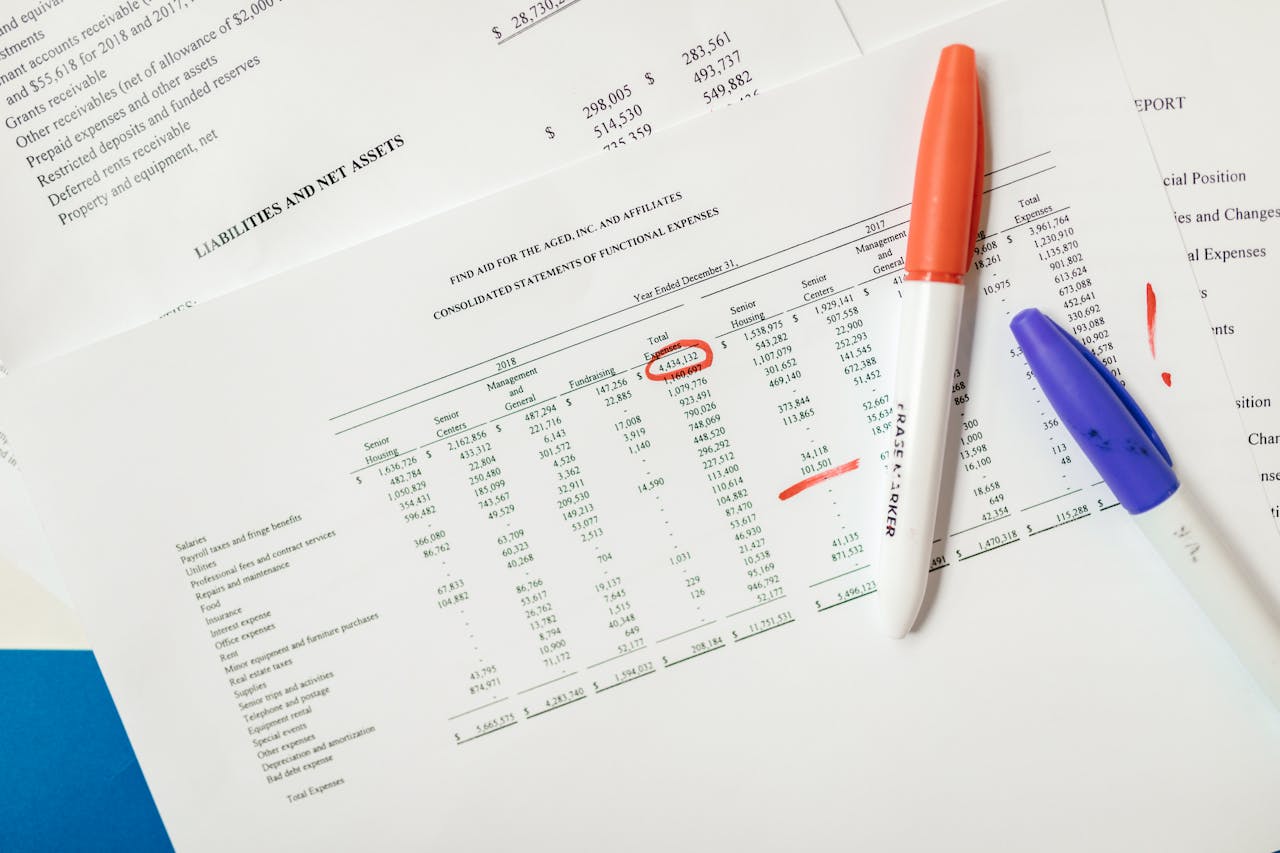
Commercial loan underwriting is simply the process a lender goes through to decide whether to approve your business loan, and on what terms. For businesses of different sizes the stakes change. A $25,000 equipment loan for a laundromat faces different scrutiny than a $1 million commercial mortgage for a warehouse.
Still, the core questions are the same. Can the business pay? Is there a fallback if it cannot? Who signs personally? What collateral secures the debt? The answers determine approval, rate, loan term, and covenants.
Read on to understand what matters for underwriters, and what you can do right now to make your application stronger and easier to approve.
Financial Documents Lenders Usually Review
Underwriters want evidence. Here are the core documents and what each proves:
Profit and Loss Statement (P&L)
Your P&L statement shows whether your business actually makes money after expenses. Underwriters look at revenue, cost of goods sold, gross margin, and your biggest expense categories. They also study trends over time.
If you run something seasonal like a car wash, they will compare strong months to weak ones. They want to see that you plan for slow periods and keep enough cash reserves to survive them.
Balance Sheet
The balance sheet is a snapshot of your business at a specific point in time. It lists assets, liabilities, and owner equity.
Assets include things you own, such as equipment, inventory, or property. Liabilities are what you owe. Equity is what is left after debts are subtracted.
Lenders use this statement to understand leverage. If debt is already high compared to assets, adding another loan increases risk. They also check whether there is real collateral behind the numbers.
Cash Flow Statement
A business can show profit on paper and still struggle to pay bills due to a lack of cash flow. The cash flow statement tracks how money actually moves in and out of the business. Underwriters focus on operating cash flow. They want to see a consistent positive inflow or a clear, realistic plan to fix gaps.
Concrete steps to strengthen your cash flow story:
- Show consistent deposits and explain one-off spikes.
- Reduce unnecessary monthly expenses before applying.
- Bring forward receivables when possible.
- Include conservative projections, not wishful numbers.
If your bills are due every 30 days but customers pay you in 60, that timing problem matters.
To stabilize cash flow, negotiate better payment terms with suppliers. Encourage faster customer payments through early payment incentives.
Tax Returns
Business and personal tax returns provide historical proof. They confirm income, show stability, and reveal how earnings are reported.
Sometimes your accounting profit differs from taxable income. Lenders adjust for certain items when calculating true repayment capacity. They treat depreciation and one-time write-offs differently from recurring expenses.
Bank Statements
Bank statements verify the claims your financials make. Underwriters match deposits to reported sales while looking for consistency. Regular deposits that align with revenue build credibility.
Large unexplained deposits, frequent transfers between unrelated accounts, or sudden spikes in activity create questions. Anything that looks unclear slows approval.
Accounts Receivable and Payables Aging
If you sell on credit, lenders want to see how quickly customers pay you. An aging report shows how long invoices have been outstanding.
If a wholesale distributor carries many 90 or 120-day receivables, that ties up working capital. The lender will want to know how you manage that gap. They may structure financing differently if collections are slow.
They also review payables aging to see how you manage your own bills.
Ownership and Legal Documents
Articles of incorporation, operating agreements, business licenses, and insurance policies prove your business legally exists and show who controls it. Underwriters review ownership, signing authority, and any potential disputes.
Keep all financial and legal documents, such as the P&Ls, balance sheets, cash flow statements, tax returns, bank statements, contracts, and licenses well-organized. Retain records for at least two years.
Purpose of the Loan
Lenders also assess the purpose of the loan. Is the loan for buying a piece of equipment that will itself generate revenue? Or is it to cover payroll because sales dipped?
To reduce friction, explain the loan amount, purpose, repayment plan, and how the funds will result in measurable business improvements.
Clear, specific uses increase approval chances. Examples:
- Financing a new delivery van for a wholesale distributor that expands the delivery area.
- Purchasing a commercial-grade oven for a bakery to increase production and margins.
- Bridging accounts receivable for a contractor awaiting insurance payouts.
When the purpose ties directly to revenue generation and you supply supporting quotes or contracts, underwriting becomes straightforward.
Once you’ve gotten that straight, make sure to match the financing type to the business need. Don’t apply for a commercial mortgage if you need short-term working capital.
You can also provide collateral where possible, if you have surplus assets that you can pledge without crippling operations. This often improves terms.
Why Creditworthiness Matters: Personal vs Business Credit
Small businesses are often judged by their owners. If your enterprise is young or has a thin credit history, underwriters will look at the owners’ personal credit. That means your personal FICO, past bankruptcies, or late mortgages matter.
Business credit profiles become more relevant as your company ages and builds history. That profile should show vendor relationships paid on time and lines of credit managed responsibly.
Common red flags include:
- Multiple recent credit inquiries.
- Collections accounts or unresolved judgments.
- Large balances on personal credit cards without an improving payment history.
- Business credit that shows repeated overdrafts or returned checks.
If you expect an inspection on your credit history, prepare a clear explanation. Lenders accept one-time issues if you show they were isolated and resolved. You can clean up personal and business credit by paying down revolving balances and correcting reporting errors before applying.
How ROK Financial Can Help You Apply
If you want a partner through the process, ROK Financial offers a broad set of commercial financing options and advisory support. We provide help with term loans, business lines of credit, SBA loans, equipment financing, accounts receivable financing, merchant cash advances, franchise financing, and commercial real estate lending. We focus on getting you a fast pre-approval so you can focus on running your business. Take the next practical step by talking to our new financing advisor.
